
A New Era for Sickness Absence
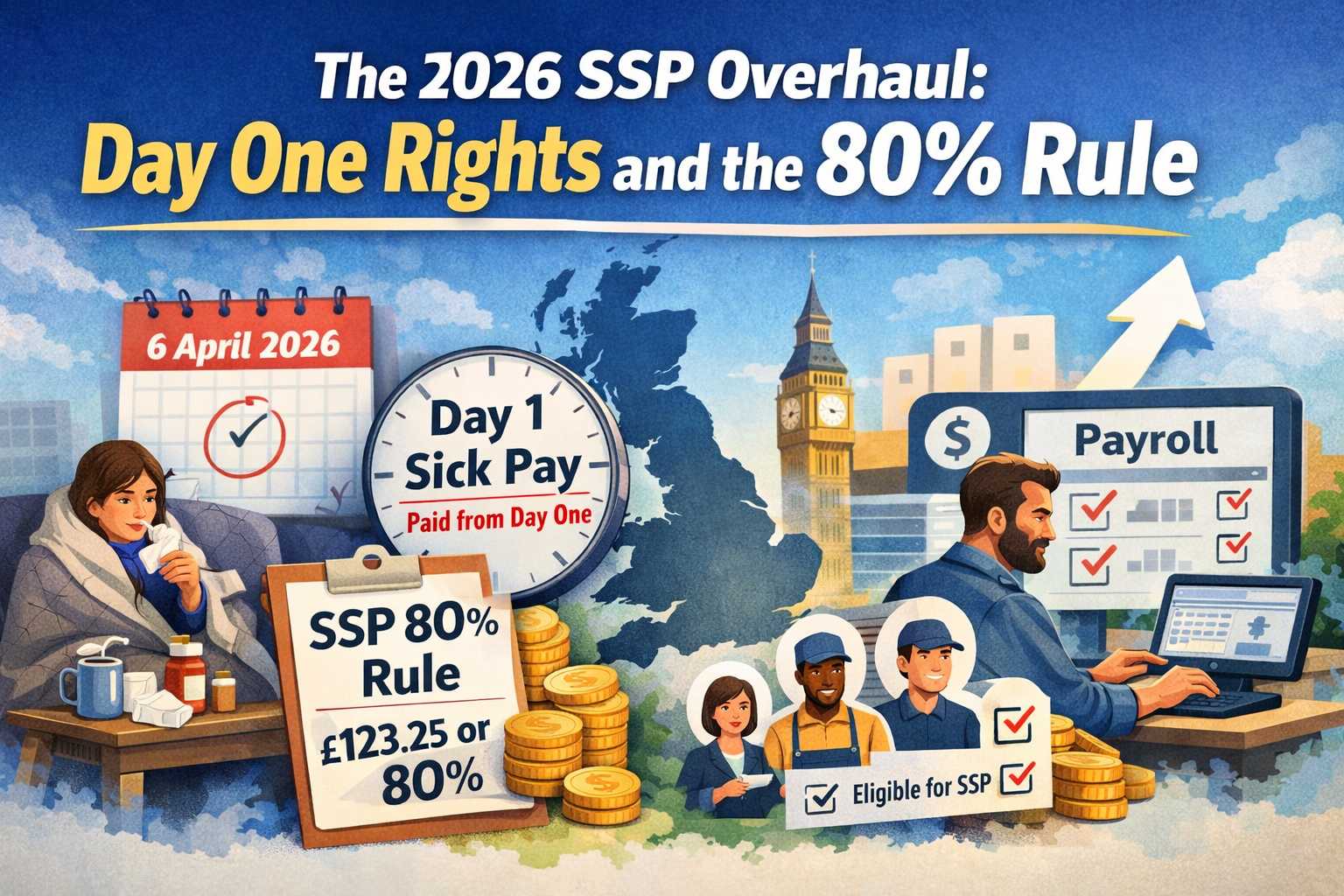
From 6 April 2026, the landscape of Statutory Sick Pay (SSP) in the UK changes fundamentally. Under the Employment Rights Act, the traditional "three waiting days" are a thing of the past. For employers, this means every single day of sickness is now a potential payroll event.
1. Day One Entitlement
Previously, SSP only kicked in on the fourth day of an employee’s absence. Now, SSP is payable from the very first qualifying day. This effectively removes the financial "buffer" employers previously had for short-term minor illnesses like colds or 24-hour bugs.
2. Removal of the Lower Earnings Limit (LEL)
Perhaps the most complex technical change for HR systems is the abolition of the Lower Earnings Limit. Historically, if a staff member earned less than £123/week, they simply didn’t qualify for SSP. In 2026, all employees qualify, regardless of how little they earn. This brings an estimated 1.3 million part-time and gig-economy workers into the statutory safety net.
3. The New Calculation: The "80% Cap"
For those lower earners now brought into scope, the government has introduced a tapered rate to ensure they aren’t "better off" on sick pay than at work. Your payroll logic must now calculate the lower of:
- The flat statutory rate (set at £123.25 per week for 2026/27).
- 80% of the employee’s average weekly earnings (AWE).
What This Means for Your HR System
Automation is no longer optional. To remain compliant, your HRIS must be able to:
- Flag Day 1 Absences: Automatically trigger SSP logic the moment a sickness is logged.
- Calculate Dynamic Rates: Run an AWE check for every claimant to determine if the 80% cap applies.
- Manage Linked Absences: Remember that the 56-day linking rule still applies. If a worker is sick twice within 8 weeks, those periods are treated as one continuous claim for the 28-week maximum duration.
Note: Unlike Statutory Maternity Pay, SSP cannot be reclaimed from HMRC. Businesses must budget for the full cost of these additional days and the expanded pool of eligible workers.