
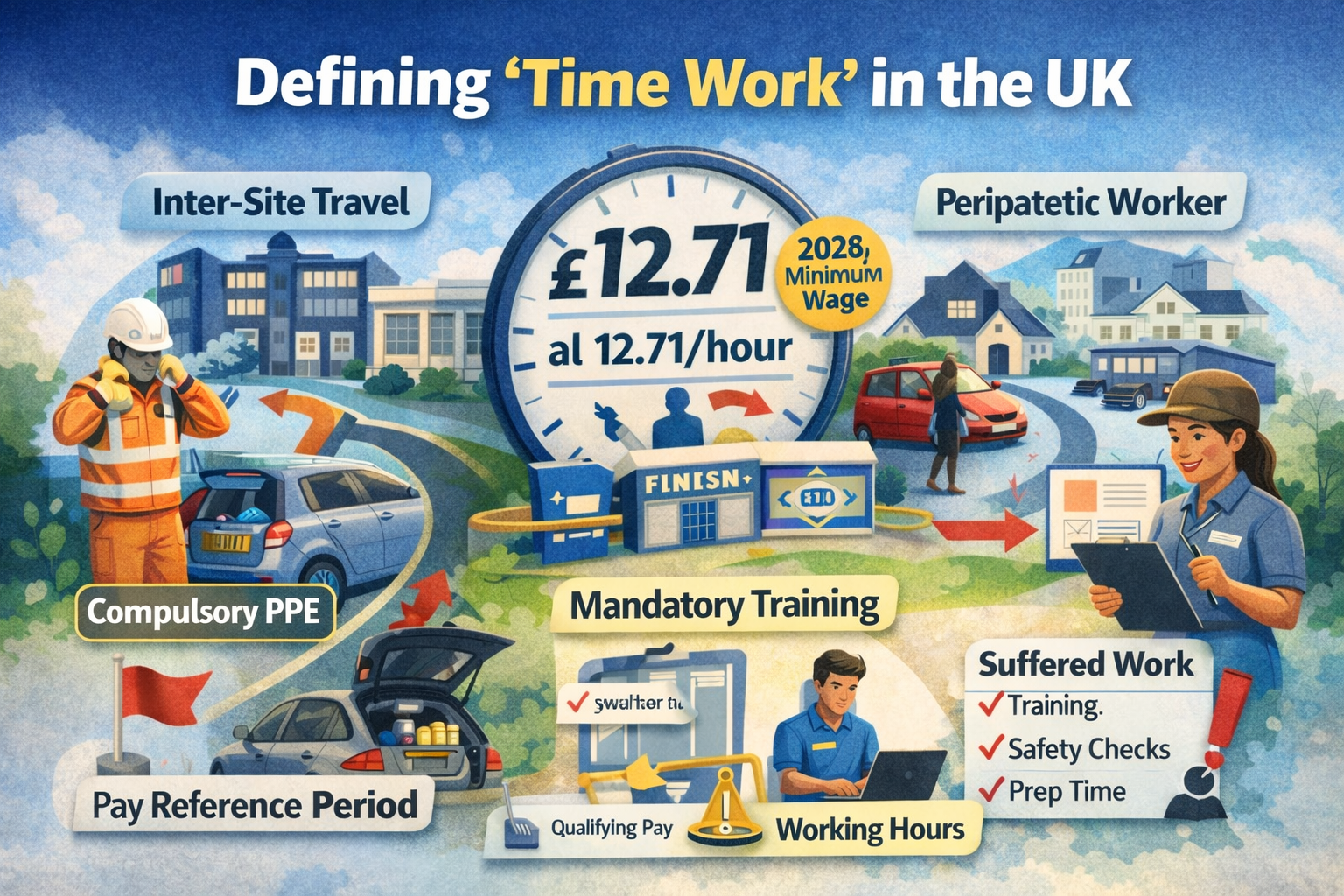
Defining "Time Work" in the UK
One of the most common ways UK businesses fall foul of National Minimum Wage (NMW) audits is by failing to account for non-productive hours. In 2026, the National Living Wage for those 21 and over has risen to £12.71 per hour, making the cost of calculation errors higher than ever.
When Does Travel Count as Working Time?
Generally, a regular commute from home to a fixed place of work does not count as working time. However, HR systems must be configured to pay for:
- Inter-site Travel: Traveling from one client or assignment to another during the workday.
- Mandatory Commutes: Travel between a place of work and a training venue.
- Peripatetic Workers: For those with no fixed office, the journey from home to the first customer can often count as working time.
Mandatory Training and "Suffered" Work
If you require an employee to attend a training session, even if it is held online or outside of regular hours, that time must be paid at least at the NMW rate. Similarly, "prep work"—such as putting on specialized PPE or performing safety checks before a shift—is compensable time. If these minutes are shaved off the clock, your average hourly rate could drop below the legal minimum.
Automating the Reference Period
NMW compliance is checked over a "pay reference period" (usually weekly or monthly). Your HRIS needs to compare total "qualifying pay" against total "working hours" for that specific period. Our latest update to WorkClocking automates this comparison, flagging any pay period where a worker risks falling below the statutory floor.